 Save to Pinterest
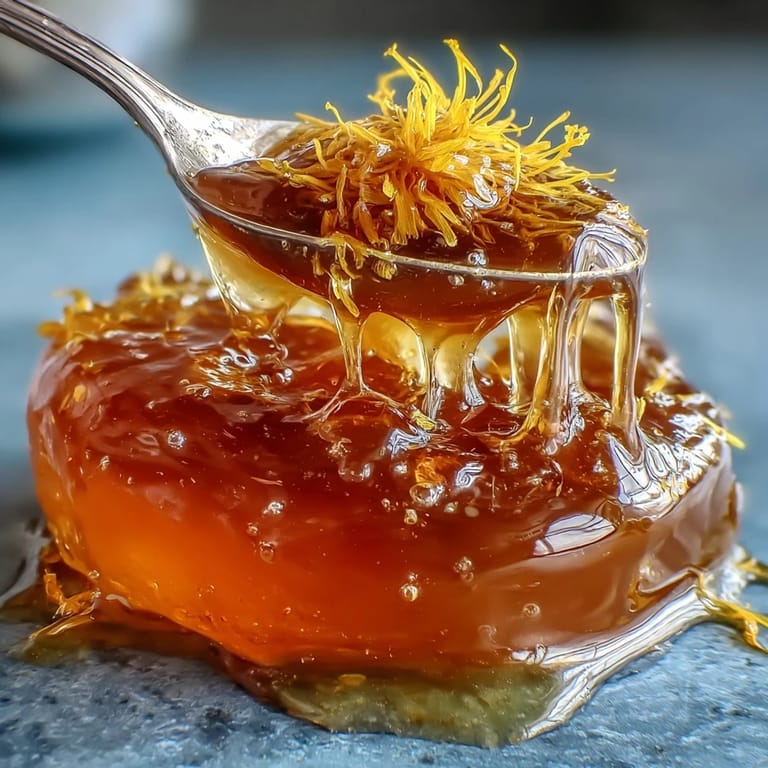
 The first time I made dandelion jelly, the kitchen smelled like spring—earthy and floral, with a hint of brightness. I recall noticing how the sunlight played across my countertop as I picked petals, and the unusual color made me smile. It felt oddly satisfying to transform unwanted lawn flowers into something golden and sweet. As I stirred the pot, it fizzed and popped gently, and the whole process seemed almost magical. The jelly itself took on a honey-like flavor that never fails to surprise me.
One sunny afternoon, my niece came over to help—she was so meticulous about picking out only the yellow petals, and we turned it into a bit of a competition. Her laughter echoed through the kitchen as we argued about who was quicker, and by the end, both our fingers were dusted yellow. Sharing dandelion jelly the next morning, slathered generously on toast, became a new little ritual for us. Sometimes the best recipes start with a scavenger hunt in the garden. It made the result taste sweeter than usual.
Ingredients
- Dandelion petals: Only the yellow parts give the jelly its floral flavor; picking them carefully avoids bitterness from the green. If you gather your own, make sure they’re pesticide-free and freshly picked.
- Water: Boiling water helps extract all the subtle flavor from dandelion petals; measuring exactly prevents a weak infusion.
- Lemon juice: Brightens the taste and helps the jelly set; I sometimes add a splash more for extra zing.
- Powdered fruit pectin: Essential for a good set; always check the amount—too much and the jelly goes rubbery, too little and it stays runny.
- Granulated sugar: Balances floral notes and helps preserve; stirring in all at once keeps the texture smooth.
Tired of Takeout? 🥡
Get 10 meals you can make faster than delivery arrives. Seriously.
One email. No spam. Unsubscribe anytime.
Instructions
- Petal Prep:
- Rinse your dandelion flowers under cool water, then gently pinch away the yellow petals, leaving the greens aside. This is a perfect moment for music and conversation—just keep the petals as pure yellow as possible.
- Steep and Strain:
- Bring water to a rolling boil, tip in your petals, and immediately remove from heat. The petals float like confetti; cover and let them steep as the kitchen fills with their aroma, then strain through cheesecloth—squeeze hard, you’ll want every last drop.
- Make the Jelly:
- Pour your strained dandelion tea into a spacious saucepan, stir in lemon juice and pectin, and bring it to a rolling boil while the steam smells grassy-sweet. Once boiling, add the sugar all at once, stir vigorously until it bubbles like lava, then boil hard for 1–2 minutes before skimming any foam.
- Jar and Process:
- Carefully ladle the hot jelly into sterilized jars, leaving a bit of space at the top. Clean the jar rims for a perfect seal, cap with lids, and process in a boiling water bath for 5 minutes—or skip the bath and refrigerate for quick enjoyment.
 Save to Pinterest
 I still remember serving this jelly to my neighbor on a breezy spring morning. She was hesitant at first, but after one bite, her eyes widened in delight, and she kept asking for the recipe. It felt less like gifting a jar and more like sharing a secret handshake of the season. That simple gesture turned a casual breakfast into an unexpectedly joyful moment.
How to Make the Most of Your Jelly
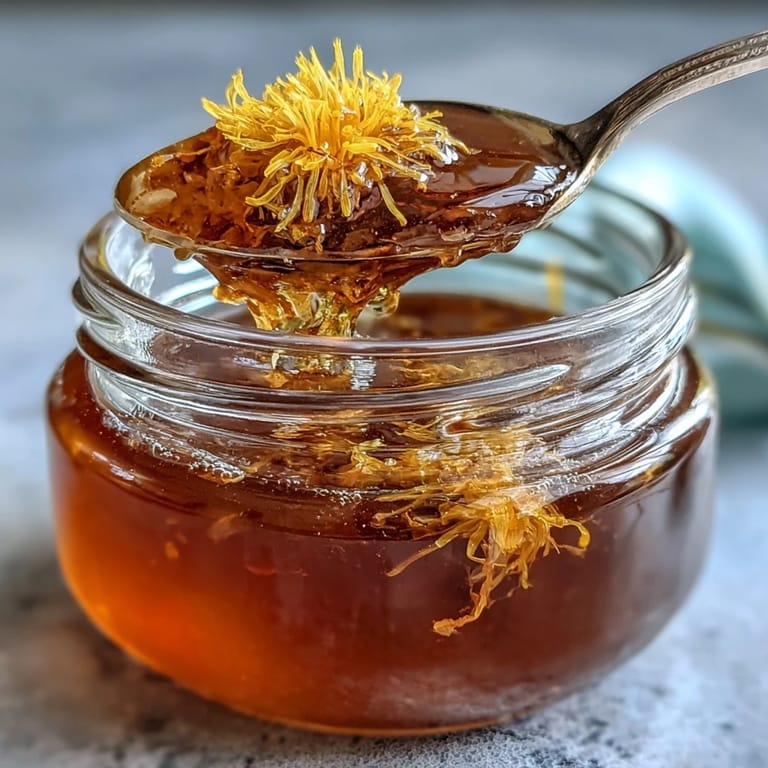
When you spoon the jelly onto warm toast, its shimmer is downright cheerful. Try drizzling a bit over vanilla ice cream or stirring it through yogurt for an easy upgrade. It also pairs well with scones and even sharp cheeses. Matching its gentle flavor with citrus zest beautifully lifts each bite. I love watching guests puzzle over the taste—it’s like revealing a hidden springtime ingredient.
Choosing and Gathering Dandelions Safely
To get the best petals, I pick early in the morning when the blooms are most open and the bees haven’t had their fill. It’s crucial to use only flowers from untreated lawns or wild spaces away from roads. Picking them by hand makes the recipe feel more connected to the season. The gathering process feels meditative—that’s where jelly-making starts. Always double-check for stray greens to keep things sweet.
Troubleshooting and Jelly Texture Secrets
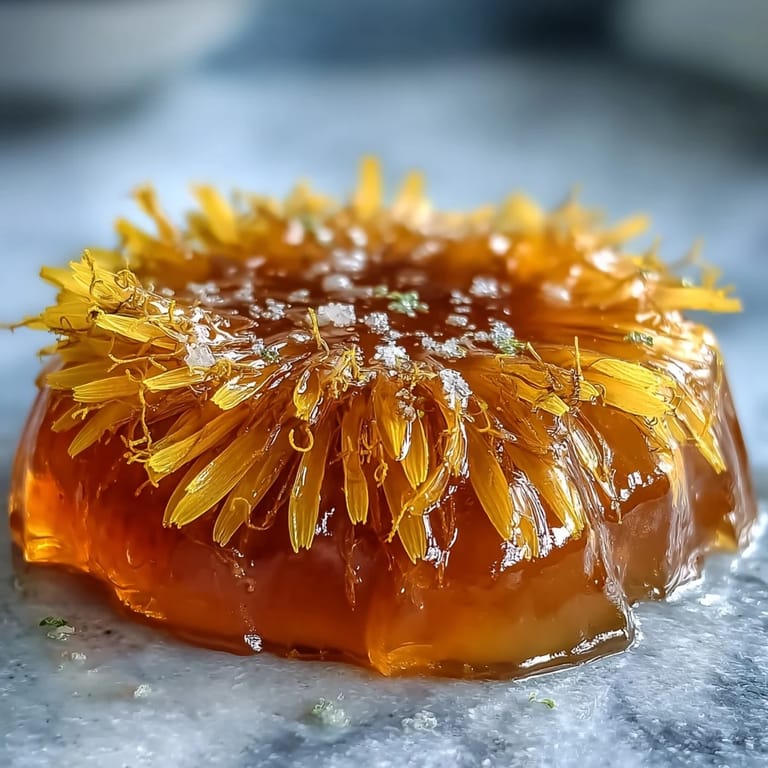
If your jelly doesn’t set, don’t panic—just reboil with extra pectin and it’ll turn out fine. The color can shift from pale gold to orange depending on how dark your petals are and how long you steep them. For an even firmer jelly, you can add a tiny bit more lemon or boil a minute longer.
- Skim foam quickly for a clear jelly.
- Sterilize jars well, even if you’re refrigerating.
- If your jelly crystallizes, warm gently and it’ll return to smooth.
 Save to Pinterest
 Homemade dandelion jelly always invites curiosity and brings people together. It’s a little jar of sunshine, ready for any table or season.
Recipe FAQs
- → How do I prepare the dandelion petals?
Rinse flowers thoroughly. Pinch off only yellow petals to avoid bitter green parts.
- → Can I use bottled lemon juice?
Yes, both fresh and bottled lemon juice work for giving brightness to the jelly.
- → What can I do if the jelly doesn't set?
If still loose after 24 hours, reboil with more pectin to achieve the ideal consistency.
- → Is the jelly suitable for gluten-free diets?
Yes, the spread is naturally gluten-free; always check pectin and sugar labels to ensure purity.
- → Can I add extra flavors?
Add orange zest or other citrus for unique flavor twists during the steeping process.
- → How should the jelly be stored?
Processed jars are shelf-stable. Refrigerate after opening for best freshness and flavor.