 Save to Pinterest
 The first time I attempted New York cheesecake, I ended up with a gorgeous crack right down the center and spent the evening frantically reading forum threads about what went wrong. My grandmother just laughed and served it with extra berries, saying perfection is highly overrated anyway. That slice taught me more than any cookbook could have about patience and letting things cool slowly. Now I make it every Thanksgiving, and somehow it is become the one dessert my family actually requests by name.
Last Christmas, my sister-in-law took one bite and immediately asked for the recipe before even finishing her slice. There is something about that classic combination of graham cracker crust and velvety filling that makes people fall silent at the table. I have learned that the water bath step, while fussy, is absolutely worth the extra effort for that restaurant quality finish.
Ingredients
- Graham cracker crumbs: Fresh crumbs work better than store-bought, but either way the butter needs to be fully melted so the crust holds together perfectly
- Unsalted butter: Melt it completely and let it cool slightly so it does not cook the crumbs when you mix them together
- Cream cheese: This must be genuinely room temperature or you will end up with lumps in your filling no matter how long you beat it
- Sour cream: Full fat gives the best texture and tang, and bringing it to room temperature prevents shocking the eggs
- Cornstarch: This tiny amount is what prevents cracks and gives the cheesecake its signature structure
- Vanilla extract: Pure vanilla makes a noticeable difference here since it is one of the main flavor notes
- Fresh lemon juice: Just enough to brighten all that richness without making it taste like lemon cheesecake
Tired of Takeout? 🥡
Get 10 meals you can make faster than delivery arrives. Seriously.
One email. No spam. Unsubscribe anytime.
Instructions
- Prepare the crust:
- Mix the graham cracker crumbs with melted butter, sugar, and a pinch of salt until the texture looks and feels like wet sand.
- Press and bake the crust:
- Press the mixture firmly into the bottom of your prepared springform pan, using the bottom of a measuring cup to pack it down evenly, then bake for just 10 minutes.
- Beat the cream cheese:
- Beat the room temperature cream cheese by itself for about 2 minutes until it is completely smooth before adding anything else.
- Add the sweeteners and flavor:
- Mix in the sugar, sour cream, vanilla, lemon juice, cornstarch, and salt until just combined, scraping down the bowl to catch any pockets of unmixed cream cheese.
- Incorporate the eggs:
- Add the eggs one at a time on low speed, stopping to scrape the bowl after each one, and resist the urge to overmix since too much air leads to cracks.
- Prepare for the water bath:
- Pour the filling over the cooled crust and smooth the top, then place the springform pan inside a larger roasting pan.
- Create the water bath:
- Pour hot water into the roasting pan until it reaches halfway up the sides of the springform pan, being careful not to splash any water into the cheesecake itself.
- Bake to perfection:
- Bake for 55 to 65 minutes until the edges are set and the center still jiggles slightly when you gently shake the pan.
- Cool gradually:
- Turn off the oven, crack the door open about an inch, and let the cheesecake cool in the oven for a full hour to prevent sudden temperature changes that cause cracks.
- Chill thoroughly:
- Run a knife around the edge to loosen it from the pan, cool completely to room temperature, then refrigerate for at least 6 hours or preferably overnight.
 Save to Pinterest
 This recipe has become my go-to for birthdays and holidays because it makes people feel special. Something about the time and care required tells people you love them enough to spend hours waiting for perfection.
Making It Ahead
I have learned that cheesecake actually improves after a day or two in the fridge as the flavors meld and the texture becomes even creamier. You can make the entire recipe up to three days before serving, just wrap it well once it is completely chilled.
Serving Suggestions
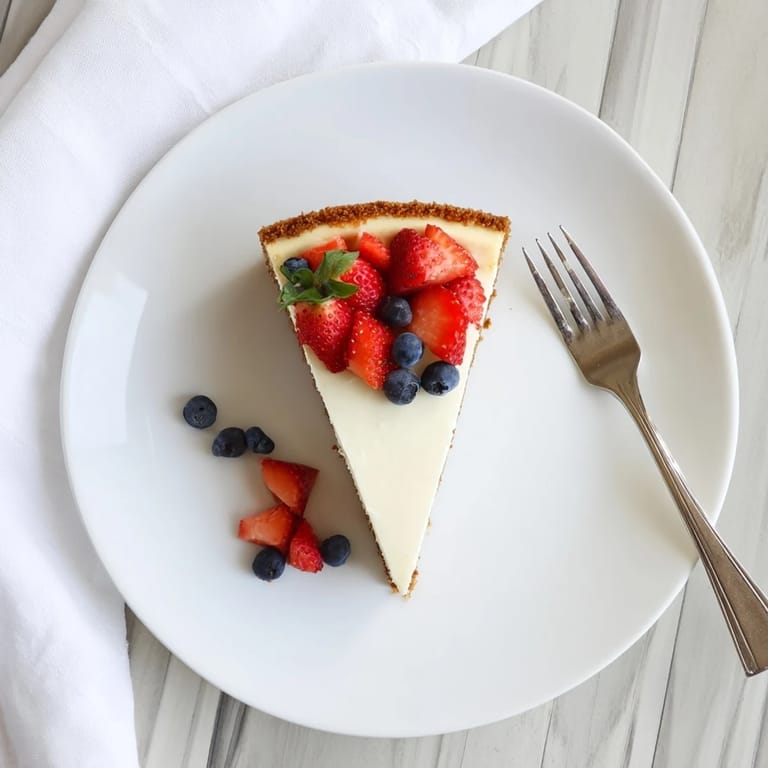
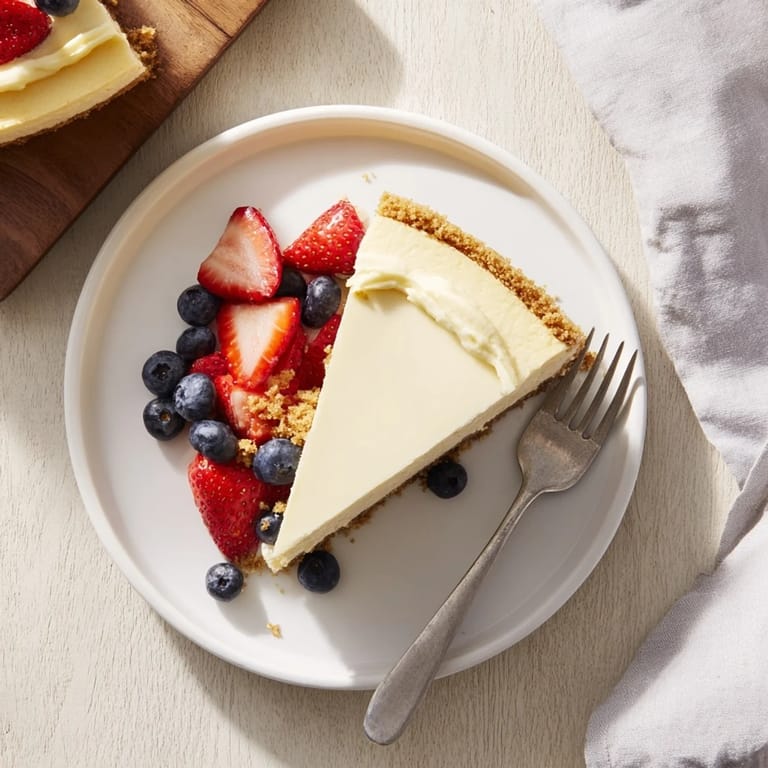
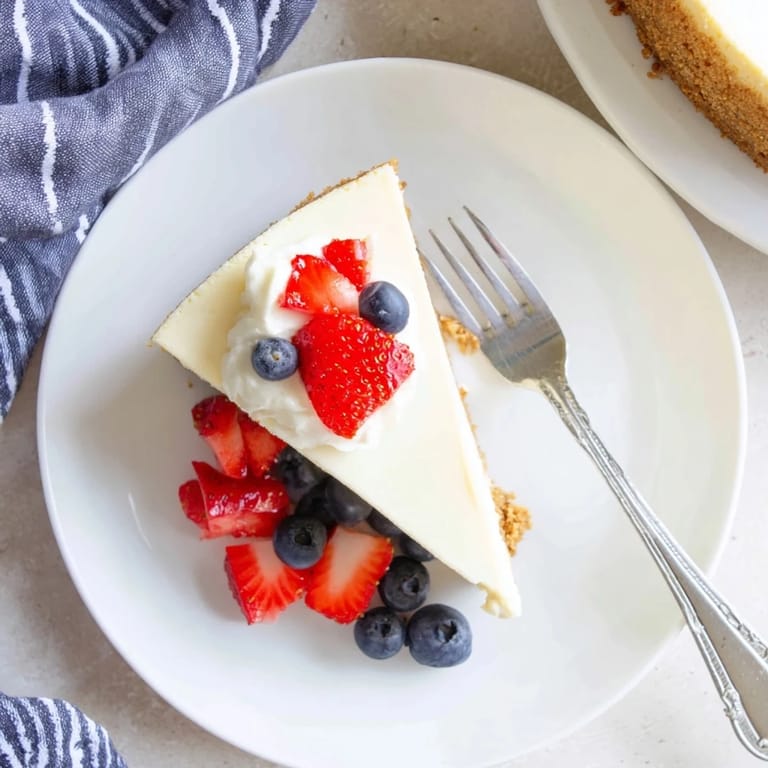
A plain slice is beautiful on its own, but fresh berries or a drizzle of fruit compote turns it into something really special. The sour cream topping is lovely if you want that classic diner style finish, but honestly, I usually skip it and let people add their own toppings.
Storage and Leftovers
Keep the cheesecake in the springform pan in the refrigerator, covering it loosely with foil once it is completely cold. It will last up to a week, though in my house it never survives more than three days.
- Use a hot knife run under hot water and wiped dry between slices for the cleanest cuts
- Individual slices freeze beautifully wrapped in plastic and placed in an airtight container
- Bring chilled slices to room temperature for about 20 minutes before serving for the best texture
 Save to Pinterest
 There is something deeply satisfying about slicing into a perfectly smooth cheesecake you made yourself. Take your time with each step and enjoy the process.
Recipe FAQs
- → Why is a water bath necessary for cheesecake?
A water bath creates gentle, moist heat that helps the cheesecake cook evenly without developing cracks or over-browning around the edges. The steam from the hot water prevents the surface from drying out and ensures the creamy texture we all love in a perfect New York style cheesecake.
- → How long should cheesecake chill before serving?
For the best texture and flavor, cheesecake needs to chill in the refrigerator for at least 6 hours, though overnight chilling (8-12 hours) is ideal. This allows the flavors to develop fully and the dense texture to set properly, making it easier to slice cleanly.
- → Why do my ingredients need to be at room temperature?
Room temperature ingredients blend together smoothly without creating lumps. Cold cream cheese can result in a lumpy batter, and cold eggs may not incorporate properly, leading to overmixing. When everything is the same temperature, you achieve that silky, homogenous filling that makes New York cheesecake so special.
- → What causes cracks in cheesecake and how can I prevent them?
Cracks typically form from overmixing (which incorporates too much air), overbaking, or cooling too quickly. Using room temperature ingredients, mixing only until just combined, employing a water bath, and following the gradual cooling process in the oven with the door cracked will help prevent unsightly cracks.
- → Can I make this cheesecake ahead of time?
Absolutely! In fact, cheesecake tastes better when made 1-2 days in advance, allowing flavors to meld and develop. You can store it tightly covered in the refrigerator for up to 5 days. For longer storage, wrap the whole cheesecake or individual slices in plastic and freeze for up to 3 months.
- → How do I know when my cheesecake is done baking?
The cheesecake is ready when the edges are set and slightly puffy, but the center still jiggles like Jell-O when you gently shake the pan. This residual heat will finish cooking the center as it cools. Remember that it will continue to firm up significantly during the chilling phase.