 Save to Pinterest
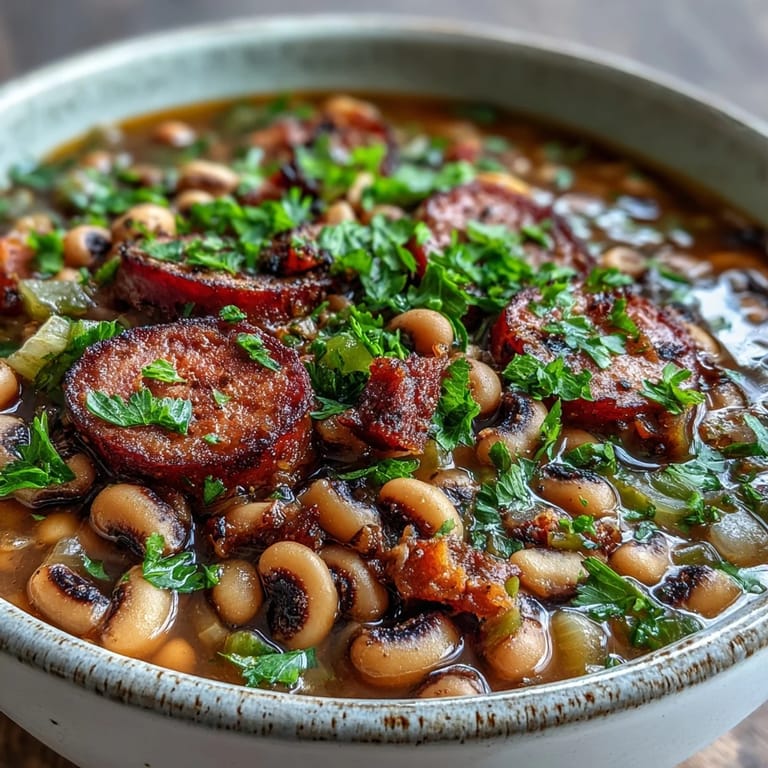
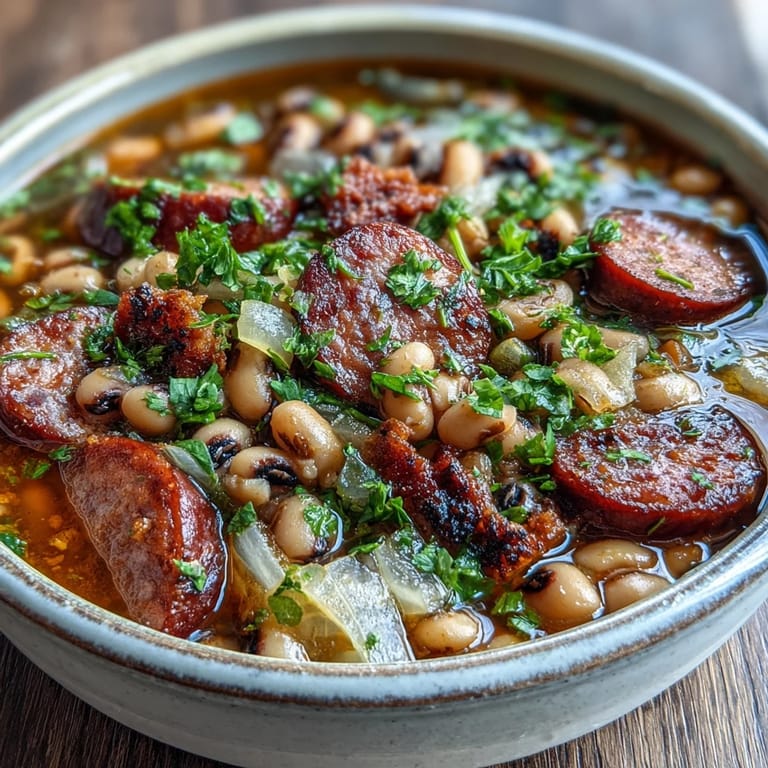
 My grandmother used to say that black-eyed peas on New Year's Day weren't just tradition—they were insurance. She'd simmer a pot with such care, filling the kitchen with the smell of bacon and smoked sausage, and somehow the whole year felt luckier just from breathing it in. The first time I made this dish myself, I was nervous about the timing, the soaking, whether I'd mess it up. But the moment those peas started to soften and the broth turned rich and golden, I understood what she meant. This isn't just comfort food; it's a ritual in a bowl.
I cooked this for my husband's family the first time we spent New Year's together, and his aunt pulled me aside after dinner to ask for the recipe. That moment—when someone you're trying to impress by asks you how you did something—that's when you know you've landed it. We've made it every year since, and it's become less about luck and more about the fact that nothing else tastes quite like home on that particular day.
Ingredients
- Smoked sausage (8 oz), sliced: Andouille or Kielbasa gives you that authentic smoky kick; don't skip browning it first because that's where the flavor lives.
- Thick-cut bacon (4 oz), diced: The rendered fat is liquid gold for sautéing your vegetables, so save every bit.
- Dried black-eyed peas (1 lb), rinsed and sorted: Sort them carefully because occasionally a pebble hides in there, and there's nothing fun about biting down on one.
- Large onion, diced: This is your flavor foundation; don't rush the sauté.
- Green bell pepper, diced: It adds sweetness and brightness that balances the smokiness beautifully.
- Celery stalks (2), diced: Often overlooked, but these are what make the broth taste complex and restaurant-quality.
- Garlic cloves (3), minced: Add it after the softer vegetables so it doesn't burn and turn bitter on you.
- Low-sodium chicken broth (6 cups): Low-sodium matters here because you're building the flavor yourself; a salty broth takes that control away.
- Water (1 cup): This dilutes the broth just enough so the peas cook evenly without tasting oversalted.
- Bay leaves (2): They're subtle but essential; they add a note that makes people ask what makes this taste so good.
- Smoked paprika (1 tsp): This is where the smoke deepens; it's not negotiable if you want authentic flavor.
- Dried thyme (1/2 tsp): A whisper of earthiness that ties the whole pot together.
- Cayenne pepper (1/2 tsp, optional): Only if you like heat; I usually add it because I like the slight burn at the back of my throat.
- Freshly ground black pepper (1/2 tsp): Fresh grinding makes a difference; pre-ground pepper tastes flat by comparison.
- Kosher salt (3/4 tsp plus more to taste): Start conservative and taste as you go because you can always add more.
- Fresh parsley (2 tbsp), chopped: A bright finish that makes the dish feel intentional and complete.
- Hot sauce, to serve: Let people customize their heat level at the table.
Tired of Takeout? 🥡
Get 10 meals you can make faster than delivery arrives. Seriously.
One email. No spam. Unsubscribe anytime.
Instructions
- Prep your peas:
- Rinse and sort your dried black-eyed peas the day before if you can, then cover them with cold water and let them sit overnight. If you're short on time, use the quick-soak method: pour boiling water over the peas, let them sit for an hour, then drain and rinse—it works almost as well, though overnight is ideal.
- Render that bacon:
- Dice your bacon and cook it slowly in your Dutch oven over medium heat until it's crispy and the fat is golden. This step isn't just about the bacon; that rendered fat is your cooking foundation, so don't rush it.
- Brown the sausage:
- Slice your sausage and sauté it in that bacon fat until it's browned on both sides and smelling irresistible. Remove both the bacon and sausage with a slotted spoon and set aside on a plate.
- Build your flavor base:
- Add your diced onion, bell pepper, and celery to that seasoned pot and let them soften for about five to six minutes, stirring occasionally. You'll know they're ready when the edges start to caramelize slightly and the onion turns translucent and sweet.
- Add the garlic:
- Stir in your minced garlic and cook for just one more minute—this brief window is enough to take away the raw edge without letting it burn. You should smell something incredible at this point.
- Combine everything:
- Pour in your soaked peas, chicken broth, and water, then add the bay leaves, smoked paprika, thyme, cayenne if you're using it, black pepper, and salt. Stir well and return the bacon and sausage to the pot.
- Let it simmer:
- Bring everything to a boil, then reduce the heat to low, cover, and let it simmer for one to one and a half hours until the peas are completely tender and the broth has turned rich and dark. Check it occasionally, stirring gently; the peas will break down slightly and thicken the broth naturally.
- Taste and adjust:
- Remove the bay leaves and taste the dish carefully before serving. Add more salt, pepper, or hot sauce if it needs it; this is your moment to make it exactly how you like it.
- Serve with love:
- Ladle the peas into bowls, sprinkle with fresh parsley, and serve hot alongside steamed rice or warm cornbread. Pass hot sauce at the table so everyone can adjust their own heat level.
 Save to Pinterest
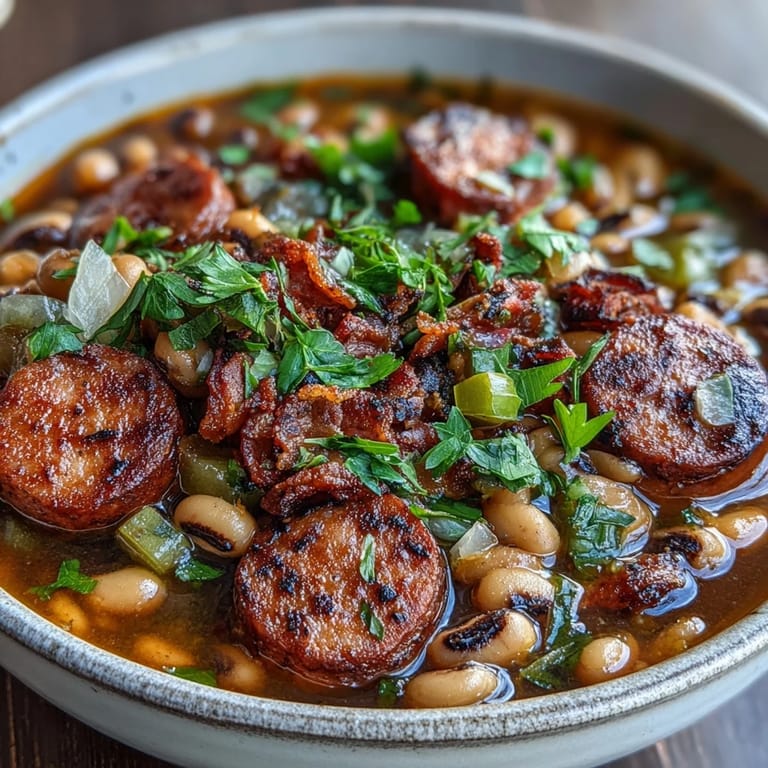
 There's a moment about forty minutes into the cooking when you lift the lid and the steam hits your face, and you realize this simple pot of peas is actually something special. My daughter wandered into the kitchen once and said it smelled like Saturday, like family, like we were taking our time instead of rushing through dinner. That's when I knew this recipe had stopped being just food and become something that marks a moment in time.
Why This Dish Matters
Black-eyed peas are rooted in African and Southern American culinary history, and eating them on New Year's Day is a tradition that carries real meaning—a wish for prosperity and good fortune as the year unfolds. Making this dish isn't just about the flavor, though that's certainly there; it's about honoring a practice that's sustained families and communities for generations. When you cook this, you're part of something larger than a weeknight dinner.
The Power of Low and Slow Cooking
There's something almost meditative about dishes that simmer for hours instead of quick-cooking on high heat. The flavors marry and deepen in a way that rushing simply won't allow; the bacon fat coats each pea, the bay leaf infuses the broth, and the sausage smoke permeates everything. I've learned that the best version of this dish is made when you're not in a hurry, when you can check it occasionally and let your kitchen fill with the smell of something good happening slowly.
Making It Your Own
The baseline recipe is solid, but this is where you get to experiment and make it truly yours. I've added diced tomatoes for brightness, swapped in vegetable broth to make it vegetarian, and even thrown in some collard greens at the end. The structure stays the same, but the details shift based on what's in your pantry and what you're hungry for.
- If you go vegetarian, increase the smoked paprika by half a teaspoon and add a dash of liquid smoke to keep that essential smoky depth.
- Fresh herbs like cilantro or scallions can replace the parsley if you want to shift the flavor profile entirely.
- Leftovers improve overnight as the flavors settle, so don't hesitate to make this a day ahead.
 Save to Pinterest
 This dish has become my answer to so many questions: What's for dinner? What should we make for the new year? What tastes like home? It's simple enough that you won't stress about the process, but flavorful enough that people will ask for the recipe and mean it. Make it once, and it becomes part of your repertoire forever.
Recipe FAQs
- → Do I need to soak black-eyed peas before cooking?
Yes, dried black-eyed peas should be soaked overnight for even cooking and better texture. For a quicker method, cover them with boiling water and let stand for one hour before draining and cooking.
- → Can I make this dish vegetarian?
Absolutely. Omit the bacon and sausage, then use vegetable broth instead of chicken broth. Add extra smoked paprika or a few drops of liquid smoke to maintain that depth of flavor.
- → What's the best way to serve black-eyed peas?
Serve them hot over steamed white rice with a side of cornbread and sautéed collard greens. Hot sauce on the side lets everyone customize their heat level. This combination makes a complete, satisfying meal.
- → How long do leftovers keep in the refrigerator?
Stored in an airtight container, leftovers will keep for up to 4 days in the refrigerator. The flavors often develop and deepen after a day or two, making reheated portions even more delicious.
- → Why are black-eyed peas eaten on New Year's Day?
Southern tradition holds that eating black-eyed peas on New Year's Day brings prosperity and good luck for the coming year. The peas symbolize coins, and when served with greens (representing money) and cornbread (representing gold), they make a complete lucky meal.