 Save to Pinterest
 There's a particular afternoon I won't forget: my kitchen smelled like caramelized tomatoes and I'd somehow managed to roast an entire sheet without burning a single one. A friend had just texted asking what I was making, and when I said tomato soup, there was this pause before they replied with a skeptical emoji. By the time they arrived an hour later, that skepticism had completely melted away with the first spoonful. That's when I realized this soup wasn't about being simple or quick—it was about knowing exactly when to let the oven do the transforming.
I made this for my sister during a particularly rainy week, and she called me three days later asking for the recipe because she'd already made it twice. She said her daughter, who normally picks around tomatoes, asked for a second bowl. There's something about the roasting process that changes how even skeptical eaters respond to tomatoes—the caramelization creates this natural sweetness that feels more like comfort than vegetables.
Ingredients
- Ripe tomatoes (1.5 kg): Choose tomatoes at their peak ripeness; underripe ones won't develop that deep, concentrated sweetness when roasted, so don't be tempted to grab whatever's available.
- Yellow onion (1 large): The sweetness here balances the tomato acidity beautifully, and roasting brings out notes you won't find in raw onions.
- Garlic cloves (6): Roasted garlic becomes almost creamy and gentle; it loses its sharp edge completely, which is the whole point.
- Extra-virgin olive oil (2 tbsp): This is where you can taste quality—a good oil adds a grassy finish that grounds the whole soup.
- Kosher salt and black pepper: Don't skip seasoning before roasting; it helps the vegetables release their moisture and caramelize properly.
- Vegetable broth (2 cups): Low sodium is essential because you're building flavor from the roasted vegetables themselves, not relying on salty liquid.
- Fresh basil leaves (1/2 cup): Add these after blending, not before—heat destroys their delicate flavor, and you want that bright, peppery note at the end.
- Unsalted butter (1 tbsp, optional): This adds a silky mouthfeel that transforms the texture from nice to luxurious.
- Sugar (1 tsp, optional): Just a whisper of sweetness to round out acidity; it's like the seasoning adjustment that makes people wonder what your secret is.
Tired of Takeout? 🥡
Get 10 meals you can make faster than delivery arrives. Seriously.
One email. No spam. Unsubscribe anytime.
Instructions
- Preheat and prepare:
- Set your oven to 220°C (425°F) and line a baking sheet with parchment paper. This temperature is high enough to encourage browning without drying the tomatoes out completely.
- Arrange the vegetables:
- Scatter your tomato halves cut-side up, onion quarters, and peeled garlic cloves across the sheet. The cut tomato surface is where the magic happens—that's your caramelization zone.
- Season and roast:
- Drizzle everything with olive oil and season generously with salt and pepper, tossing to coat evenly. Roast for 35 to 40 minutes, until the tomato edges are deeply browned and the onions have softened into almost-transparent pieces.
- Build the base:
- Pour roasted vegetables and every precious drop of pan juice into a large pot. Add vegetable broth and bring to a gentle simmer over medium heat—you're not rushing this part, just letting flavors start to mingle.
- Add the finishing touches:
- Stir in fresh basil, butter if using it, and that optional pinch of sugar. Simmer for 5 minutes so the basil can release its oils and the butter can integrate throughout.
- Blend to silky perfection:
- Use an immersion blender to puree until completely smooth, or work in batches with a countertop blender and return to the pot. If you want an absolutely refined texture, strain through a fine sieve to catch any remaining tomato skin.
- Taste and adjust:
- This is non-negotiable—taste before serving and add more salt, pepper, or that optional sugar depending on your tomatoes' natural acidity. Every batch tastes slightly different, which is the beauty of cooking with real fruit.
- Serve with intention:
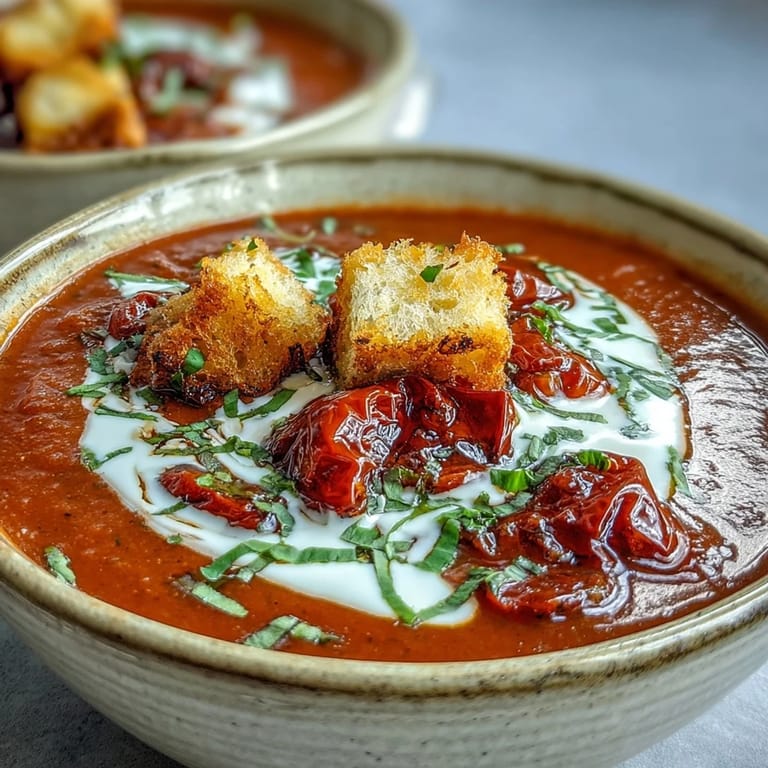
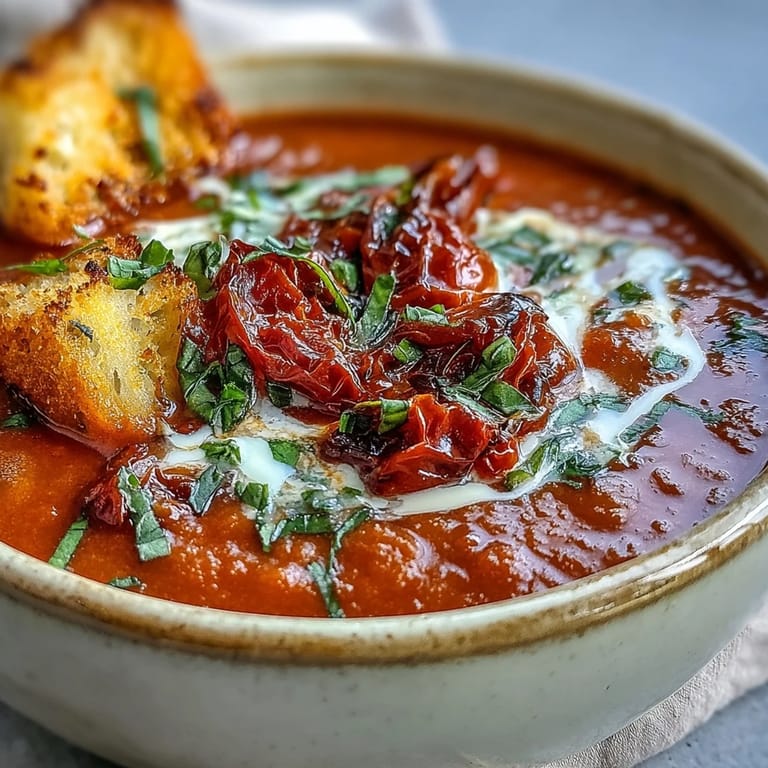
- Ladle into bowls, drizzle with cream if you like, and scatter fresh basil and croutons on top. The contrast between the hot, silky soup and the cool cream is part of why this feels restaurant-quality.
 Save to Pinterest
 One winter evening, I brought a thermos of this soup to my neighbor who'd just come home from the hospital. She said it was the first thing that tasted like more than just sustenance to her in weeks. That's when I understood that cooking—especially something this warm and silky—is sometimes the most honest way to say you care.
The Magic of Roasting
Roasting tomatoes seems almost counterintuitive at first; you're concentrating their water content, which sounds like it would dry them out. But what actually happens is the sugars intensify, the acids caramelize, and you end up with depth that no amount of simmering could create. It's the difference between ripe and reduced, between fresh and transformed. The oven does something your stovetop simply cannot, which is why this soup never tastes like it came from a can.
When to Add the Cream
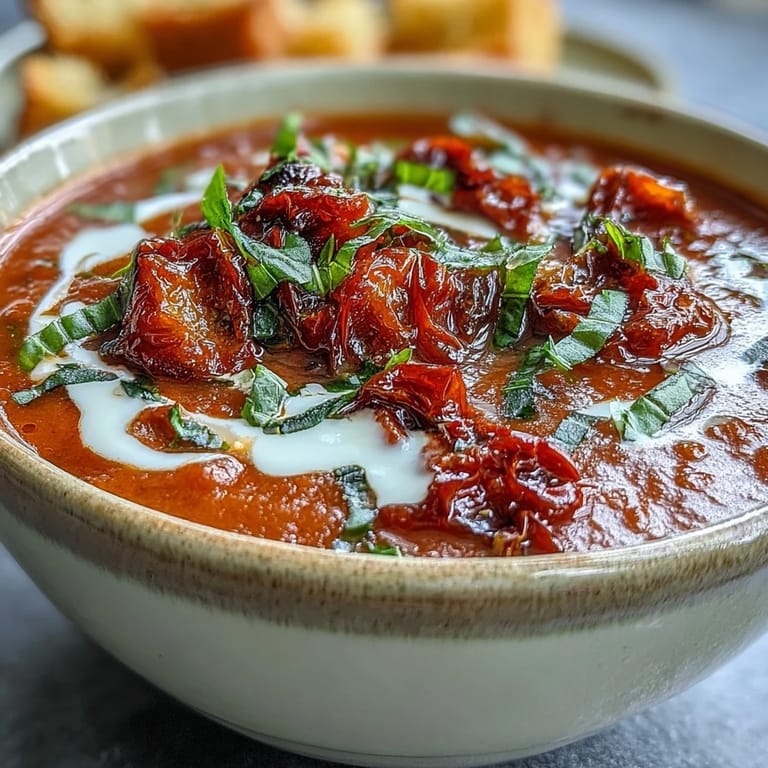
I used to stir cream directly into the pot, which makes sense on the surface but is actually a missed opportunity. The real technique is to drizzle it on top of each bowl just before serving, so it creates these beautiful clouds against the deep red soup while staying cool and luxurious on your tongue. Some people swirl it in with a spoon; others just let it sink naturally. The choice is yours, but the visual moment before you take that first spoonful actually matters here.
Variations and Personal Touches
This soup is forgiving in the best way—it invites you to make it yours without apologizing for departures. I've added a splash of balsamic vinegar when tomatoes felt a bit flat, stirred in red pepper flakes for warmth on cold nights, and once even added a teaspoon of tomato paste for a friend who loves intense flavor. Each change felt natural, not like I was fixing something broken. The foundation is strong enough to support your experiments, which is perhaps the most important quality any recipe can have.
- A pinch of red pepper flakes added during the roasting stage brings gentle heat that builds rather than shocks.
- Balsamic vinegar or tomato paste can deepen flavor if your tomatoes feel less intense than you'd hoped.
- For vegan cooking, substitute butter with a quality olive oil and use coconut or oat cream instead of dairy—the soup loses nothing in translation.
 Save to Pinterest
 This soup has become one of those recipes I make without consulting the instructions anymore, the kind that lives in your hands and your senses rather than on a page. It's restaurant-quality comfort in a bowl, and somehow that never gets old.
Recipe FAQs
- → Can I use canned tomatoes instead of fresh?
While fresh tomatoes provide the best flavor when roasted, you can use high-quality canned whole tomatoes in a pinch. Drain them well and roast briefly to concentrate their flavor, though the caramelization won't be as pronounced.
- → How can I make this soup creamier without dairy?
Coconut cream, cashew cream, or oat cream work beautifully as dairy-free alternatives. You can also add a peeled, roasted potato during the simmering stage for natural creaminess without any added cream.
- → Can I prepare this soup in advance?
Absolutely! This soup actually improves in flavor when made a day ahead. Store it in an airtight container in the refrigerator for up to 4 days, or freeze for up to 3 months. Reheat gently on the stovetop, adding a splash of broth if needed.
- → What's the best way to achieve a perfectly smooth texture?
For the silkiest results, blend the soup thoroughly with an immersion blender, then strain it through a fine-mesh sieve to remove any seeds or skin fragments. A high-powered countertop blender will also create an exceptionally smooth consistency.
- → How do I prevent the soup from being too acidic?
The natural sugars released during roasting help balance acidity, but you can also add a teaspoon of sugar, a pinch of baking soda, or an extra tablespoon of butter. Taste as you go and adjust to your preference.
- → What pairs well with this soup for a complete meal?
Serve with crusty sourdough bread, a grilled cheese sandwich, or a fresh arugula salad with shaved Parmesan. It also makes an elegant starter before pasta dishes or roasted chicken.