 Save to Pinterest
 There's something about the way miso transforms salmon that caught me off guard the first time I tried it—not the usual lemon-and-butter approach, but something deeper, almost caramel-like when it hits the heat. My partner came home to the kitchen smelling like toasted sesame and ginger, and before I could even plate it, they were already asking if this was becoming a regular thing. That question answered itself pretty quickly, because now I find myself craving this bowl on nights when I need something that feels both comforting and energizing at once.
I made this for a small dinner gathering last spring, and watching my guests actually pause mid-conversation to comment on the flavors was oddly satisfying—they genuinely couldn't place what made it taste so good, just kept coming back for another bite. One friend asked if the salmon was marinated in something special, and when I explained it was just miso and a few pantry staples, she immediately wanted the recipe. That's the moment I knew this bowl had staying power beyond my own kitchen.
Ingredients
- Salmon fillets (150 g each, skinless): Look for fillets that feel firm and smell fresh, never fishy, and ask your fishmonger to skin them if they haven't already—it saves time and ensures even cooking.
- White miso paste: This is milder and slightly sweeter than red or dark miso, which is exactly what you want here to complement rather than overpower the salmon.
- Mirin: Sweet rice wine that adds shine and caramelization to the glaze—don't skip it or substitute with sugar, the depth isn't the same.
- Soy sauce: Use tamari if you need gluten-free, and taste your marinade before committing because soy saltiness varies between brands.
- Honey: Just a touch to balance the umami, but it also helps the glaze brown beautifully in the oven.
- Rice vinegar: This brightness cuts through the richness and keeps the dish from feeling too heavy.
- Toasted sesame oil: A tiny amount goes a long way—use the good stuff because it's the flavor anchor in the marinade.
- Fresh ginger and garlic: Minced fine so they distribute evenly through the glaze and don't burn during cooking.
- Jasmine rice: Fragrant and fluffy, it's the perfect vehicle for soaking up all that glossy glaze.
- Fresh spinach: Wilts down quickly and picks up flavor from the ginger and garlic sauté, becoming almost silky on your tongue.
- Green onions, sesame seeds, and nori: These garnishes aren't just for looks—they add texture and a final layer of umami that makes the bowl feel complete.
Tired of Takeout? 🥡
Get 10 meals you can make faster than delivery arrives. Seriously.
One email. No spam. Unsubscribe anytime.
Instructions
- Build Your Miso Magic:
- Whisk together the miso paste, mirin, soy sauce, honey, rice vinegar, sesame oil, ginger, and garlic in a small bowl until the mixture is smooth and glossy, with no lumps of miso remaining. You'll notice the aroma shifting as you mix—that's when you know all the flavors are about to work together.
- Give the Salmon Time to Soak:
- Arrange your salmon fillets in a shallow dish or zip-top bag and pour the marinade over them, making sure each piece gets thoroughly coated. Pop it in the fridge for 15 to 30 minutes while you handle the rice and spinach—the salmon will absorb the flavors without getting mushy.
- Rice Becomes the Foundation:
- Rinse your jasmine rice under cold water until the water runs mostly clear, then combine it with three cups of fresh water and a pinch of salt in a saucepan. Bring it to a boil, then immediately lower the heat, cover with a lid, and let it simmer gently for 12 to 15 minutes—resist the urge to peek, because steam loss changes everything.
- Spinach Gets the Flavor Treatment:
- Heat vegetable oil in a large skillet over medium heat and add your minced ginger and garlic, letting them bloom for about 30 seconds until your kitchen smells incredible. Toss in your fresh spinach with a pinch of salt and keep stirring until it's just wilted (usually a minute or two), then finish with a teaspoon of soy sauce and remove from heat.
- Salmon Takes the Heat:
- Preheat your broiler or oven to 220°C (425°F), line a baking sheet with foil, and lightly oil it so nothing sticks. Arrange your marinated salmon fillets on the tray and broil or bake for 8 to 10 minutes—you're looking for the edges to feel opaque when you gently press them and the glaze to be caramelized and slightly darkened.
- Bring It All Together:
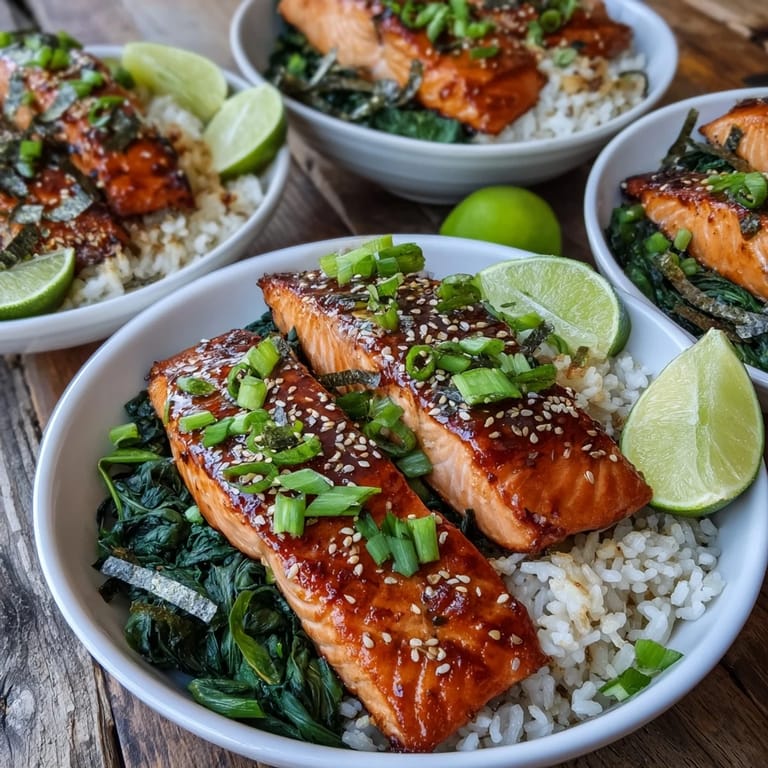
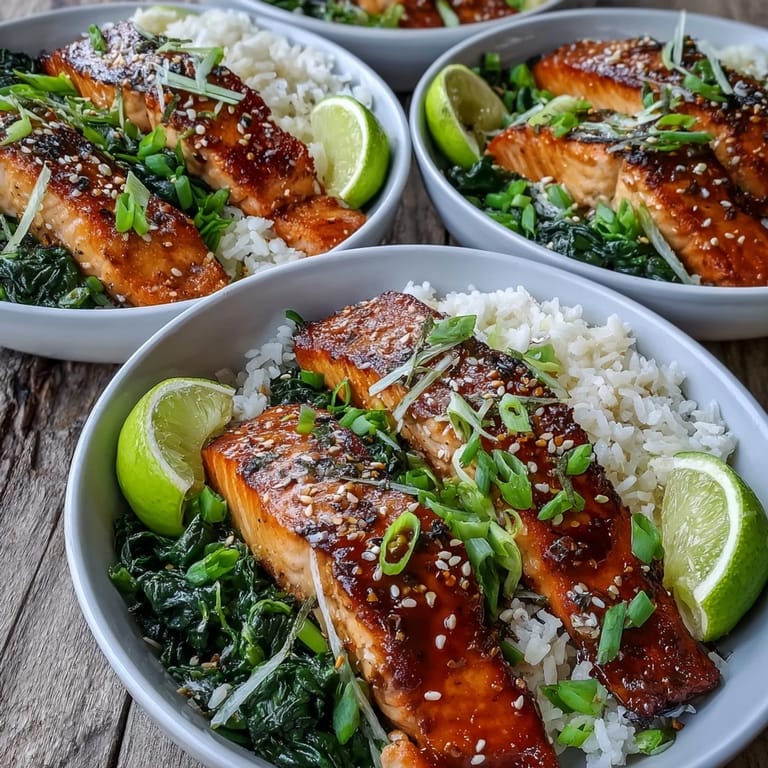
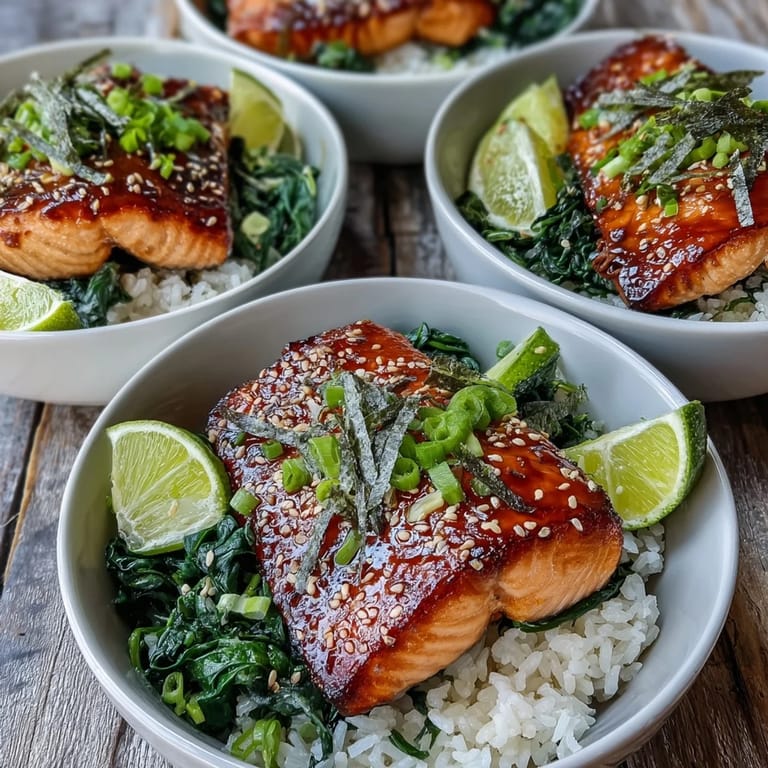
- Divide your fluffy jasmine rice among four bowls, then top each portion with a generous handful of sautéed spinach and one perfect salmon fillet. Sprinkle everything with thinly sliced green onions and toasted sesame seeds, then add nori strips and lime wedges if you want that extra dimension.
 Save to Pinterest
 One quiet evening, I made this bowl just for myself after a long day, and sitting down with it felt like pressing a reset button. The combination of the creamy salmon, the bright ginger spinach, and the gentle jasmine rice created this moment where everything else just melted away, and I realized how powerful it is when food actually nourishes you on multiple levels.
Why Miso Works Magic on Salmon
Miso is basically a flavor amplifier—it contains glutamates that enhance the natural umami in salmon, making it taste richer and more complex than it has any right to be. The fermentation in miso also creates compounds that caramelize beautifully when exposed to high heat, giving you that glossy, restaurant-quality finish without any real effort. I've tried many salmon preparations over the years, but this miso approach feels the most sophisticated and surprising, like you've unlocked something the fish was always capable of being.
Building Flavor Layers in Your Bowl
The genius of this bowl isn't just the salmon—it's how every component talks to the others, creating depth rather than competing for attention. The rice absorbs the glaze that pools at the bottom, the ginger-garlic spinach bridges the gap between earthy and bright, and the sesame seeds and nori add texture and a final whisper of umami. When you eat it, you're never experiencing just salmon or just rice; you're eating a conversation between flavors, and that's what makes you want to come back.
Timing Tips and Kitchen Rhythm
The beauty of this recipe is that everything can be happening at almost the same time if you plan it right—marinate the salmon while the rice water comes to a boil, prep your spinach while the rice simmers, and get the salmon in the oven just as the rice finishes. It sounds choreographed, but it's actually quite forgiving because none of the components are precious or finicky; they're built to be flexible. I've made this with interruptions, distractions, and slightly off timing, and it still comes out tasting like you knew exactly what you were doing.
- Start your rice first so it has time to simmer undisturbed while you handle the other elements.
- Prep all your aromatics (ginger, garlic, green onions) before you start cooking anything, so you're not scrambling when things are in motion.
- Keep a small timer handy because oven cooking times vary, but you want to catch that salmon at the exact moment it's opaque and the glaze is set.
 Save to Pinterest
 This bowl has become my go-to recipe when I want to feel like I've taken care of myself without spending hours in the kitchen. It's the kind of meal that reminds you why cooking for yourself matters—because you can make something that tastes this good, this intentional, and this nourishing whenever you need it.
Recipe FAQs
- → What does miso glaze taste like?
The miso glaze delivers a savory-sweet umami flavor with subtle fermented notes from the white miso paste, balanced by the sweetness of honey and mirin. It creates a rich, caramelized coating that enhances the natural taste of salmon.
- → Can I use other types of fish?
Yes, you can substitute salmon with other fatty fish like black cod, trout, or mackerel. Leaner fish like cod or sea bass work too but may require less cooking time to prevent drying out.
- → How do I know when the salmon is done?
The salmon is ready when it flakes easily with a fork and the internal temperature reaches 145°F (63°C). The glaze should be caramelized and slightly sticky. Avoid overcooking to keep the fish moist and tender.
- → Can I make this gluten-free?
Absolutely. Use tamari instead of regular soy sauce and ensure your miso paste is certified gluten-free. Many traditional miso pastes are naturally gluten-free, but always check labels to be certain.
- → What can I add for more vegetables?
Consider adding sliced cucumber, pickled carrots, steamed edamame, or avocado for extra color and nutrition. Shredded cabbage or blanched broccoli also complement the flavors beautifully.