 Save to Pinterest
 My sister called mid-week asking for something that didn't feel like a weeknight compromise, and I found myself reaching for salmon without thinking twice. There's this particular moment when you pour a maple-soy glaze over a sizzling fillet and the kitchen fills with this warm, umami-sweet steam that makes everything feel intentional. I'd been making this for about three years by then, mostly because it takes twenty minutes flat and somehow tastes like you actually tried. That night, she told me it was the first time in weeks she'd sat down without checking her phone.
I made this for a dinner party once where someone mentioned they were tired of kale salads and chicken breast, and I watched their face when they took that first bite of the glazed salmon. The combination of crisp vegetables and that sticky-sweet coating felt like validation that weeknight cooking doesn't have to be boring. We ended up talking about food for two hours instead of whatever was supposed to happen after dinner.
Ingredients
- Salmon fillets, skin-on or skinless: Look for bright pink flesh that springs back when you touch it; skin-on helps the fish stay moist while the skin crisps up beautifully.
- Pure maple syrup: The real stuff makes all the difference, not the pancake syrup that tastes like corn and regret.
- Low-sodium soy sauce: This gives you control over the saltiness, especially important since the glaze concentrates as it cooks.
- Rice vinegar: This brings a subtle tang that keeps the glaze from becoming cloying; it's the ingredient people can't quite identify but keeps asking about.
- Fresh lime juice: Bottled works in a pinch, but fresh lime juice brightens everything and adds this living quality to the dish.
- Sesame oil: Just a teaspoon adds that toasted, nutty depth that makes someone say this tastes fancy.
- Garlic and ginger: Mince them fresh right before cooking so their oils are still alive and fragrant.
- Jasmine or basmati rice: Jasmine is more forgiving and has a gentle, slightly sweet aroma that pairs perfectly with the glaze.
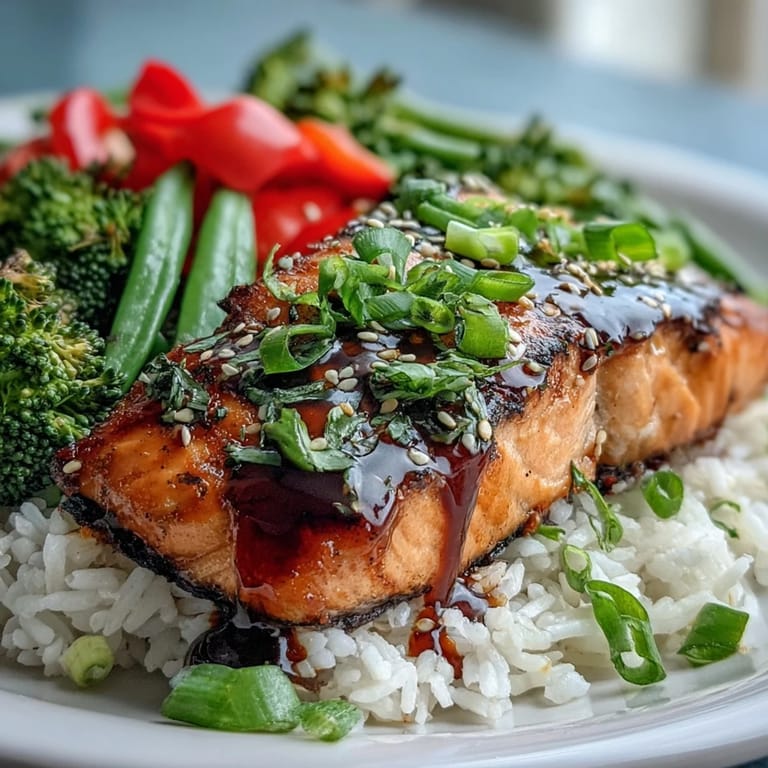
- Broccoli, snap peas, and red bell pepper: The brightness of these vegetables cuts through the richness of the salmon and glaze, creating balance on the plate.
- Green onions and toasted sesame seeds: These aren't optional extras; they're the finishing touches that make the dish feel intentional and complete.
Tired of Takeout? 🥡
Get 10 meals you can make faster than delivery arrives. Seriously.
One email. No spam. Unsubscribe anytime.
Instructions
- Get your rice going first:
- Rinse the rice under cold water to remove excess starch, then combine with two cups of water in a medium saucepan. Bring to a boil, reduce heat to low, cover, and let it simmer undisturbed for twelve minutes; this is your foundation, so treat it gently.
- Build the glaze while rice cooks:
- In a small bowl, whisk together three tablespoons maple syrup, three tablespoons soy sauce, one tablespoon rice vinegar, one tablespoon fresh lime juice, one teaspoon sesame oil, two minced garlic cloves, and one teaspoon grated ginger until everything is fully combined. The glaze should smell complex and balanced, with no single note overpowering the others.
- Season your salmon simply:
- Pat the salmon fillets dry with paper towels, then season each side lightly with salt and pepper. This simplicity lets the glaze take center stage.
- Get the pan hot and sear the salmon:
- Heat one tablespoon vegetable oil in a large nonstick skillet over medium-high heat until shimmering; place salmon skin-side down if the skin is on, and let it cook undisturbed for three minutes so the outside develops color. You'll hear a gentle sizzle that tells you the temperature is right.
- Flip and glaze:
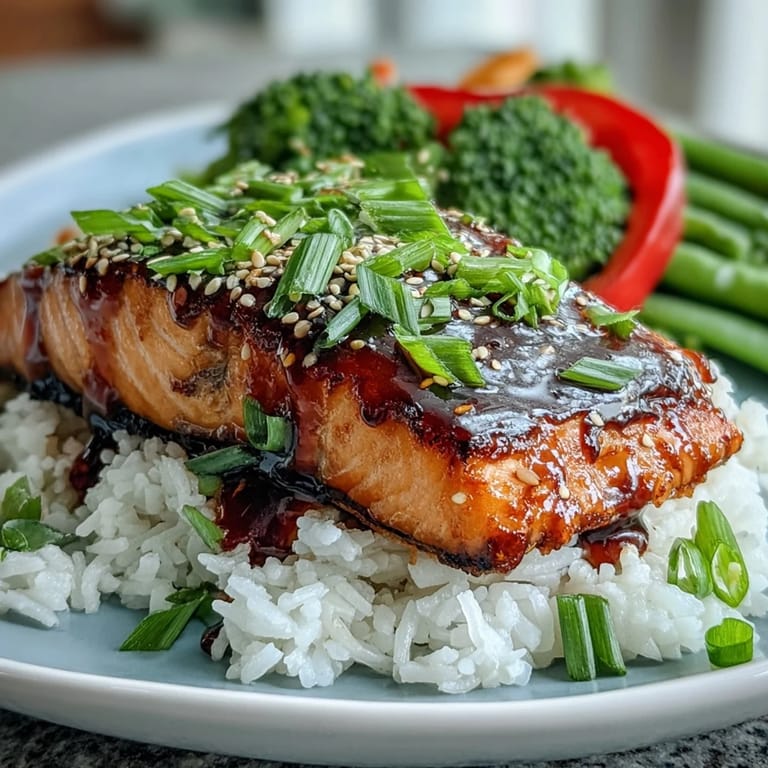
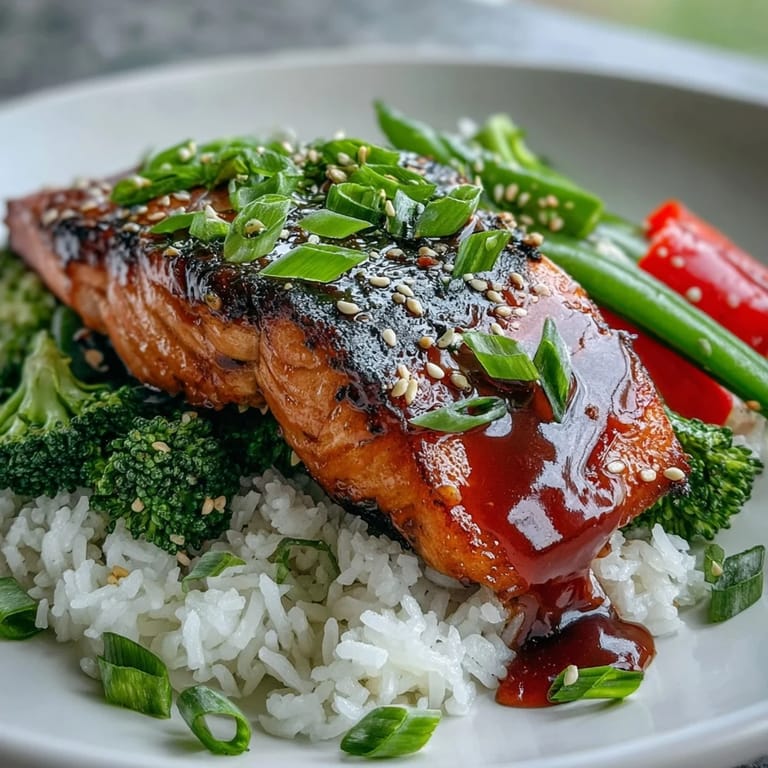
- Carefully flip the salmon, then pour the maple soy glaze directly over the fillets and continue cooking for three to four minutes, spooning the glaze over the fish occasionally. Watch as the glaze thickens and becomes glossy, coating the salmon in this burnished finish that's equal parts sweet and savory.
- Cook vegetables while salmon finishes:
- In a separate pan or steamer basket, cook one cup broccoli florets, one cup snap peas, and one sliced red bell pepper for three to four minutes until they're crisp-tender with just a whisper of give. They should taste fresh and alive, not soft.
- Bring it all together:
- Divide the cooked rice among four bowls, top each with a portion of vegetables and a glazed salmon fillet, then drizzle any extra glaze from the pan over everything. Finish with sliced green onions, toasted sesame seeds, and a lime wedge for brightness.
 Save to Pinterest
 The first time I made this for someone I was trying to impress, I stressed about timing and ended up with everything done at different moments, which somehow still worked out. But that's when I learned that simplicity and preparation matter more than perfection; the dish has this forgiving nature where as long as your components are good, they come together beautifully on the plate.
Why This Glaze Works
The maple syrup brings sweetness and acts as a binder for the glaze, while the soy sauce adds umami depth that keeps it from tasting like dessert. The rice vinegar and lime juice add brightness and prevent the whole thing from becoming heavy, and the sesame oil contributes this toasted background note that makes people pause and wonder what you did differently. It's a formula that feels balanced every single time.
Timing Is Everything
This dish works because you're not juggling six different cooking times; the rice takes twelve minutes, the salmon takes six to seven minutes total, and the vegetables cook in the time it takes you to flip the fish. Getting everything ready before you start cooking means you're never standing around waiting or frantically chopping vegetables while something burns. One night I prepped everything in the morning and came home to a fifteen-minute dinner, which felt like discovering a life hack.
Making It Your Own
The beauty of this dish is how it welcomes small adjustments without falling apart. You could add a pinch of red pepper flakes to the glaze if you like heat, or swap in honey for the maple syrup if that's what you have. The vegetable combination is really just a suggestion; asparagus, bok choy, carrots, or mushrooms would all be wonderful here.
- For extra heat and complexity, add a quarter teaspoon of red pepper flakes to the glaze before pouring.
- Try swapping the vegetables based on what's in season or what you have on hand; the cooking time stays the same.
- If you prefer a lighter meal, serve this over cauliflower rice instead of regular rice for a lower-carb option.
 Save to Pinterest
 This meal has become my go-to when I want something that tastes like effort without feeling like burden, and somehow it always reminds me why I started cooking in the first place. It's the kind of dish that makes weeknight dinner feel intentional.
Recipe FAQs
- → Can I use other types of fish?
Yes, this glaze works beautifully with other fatty fish like trout, arctic char, or mackerel. Thinner fillets may need reduced cooking time to prevent drying out.
- → What's the best way to tell when salmon is done?
Salmon is perfectly cooked when it flakes easily with a fork and reaches an internal temperature of 145°F. The flesh should turn opaque but still remain moist. Avoid overcooking as the fish will become dry.
- → Can I make the glaze ahead of time?
Absolutely. Whisk the glaze ingredients together and store in an airtight container in the refrigerator for up to a week. Bring to room temperature before using, or warm slightly if the maple syrup has crystallized.
- → How can I make this dish spicy?
Add red pepper flakes to the glaze, sriracha during cooking, or serve with chili oil. A teaspoon of gochujang also adds depth and gentle heat that complements the maple sweetness.
- → What vegetables work best alongside?
Bok choy, asparagus, snow peas, and carrots all pair wonderfully. Choose vegetables that cook quickly and maintain their crunch when steamed or sautéed briefly.
- → Is there a substitute for maple syrup?
Honey works as a direct substitute, though it provides a slightly different flavor profile. Brown rice syrup or agave nectar can also be used, adjusting quantities to taste as sweetness levels vary.